
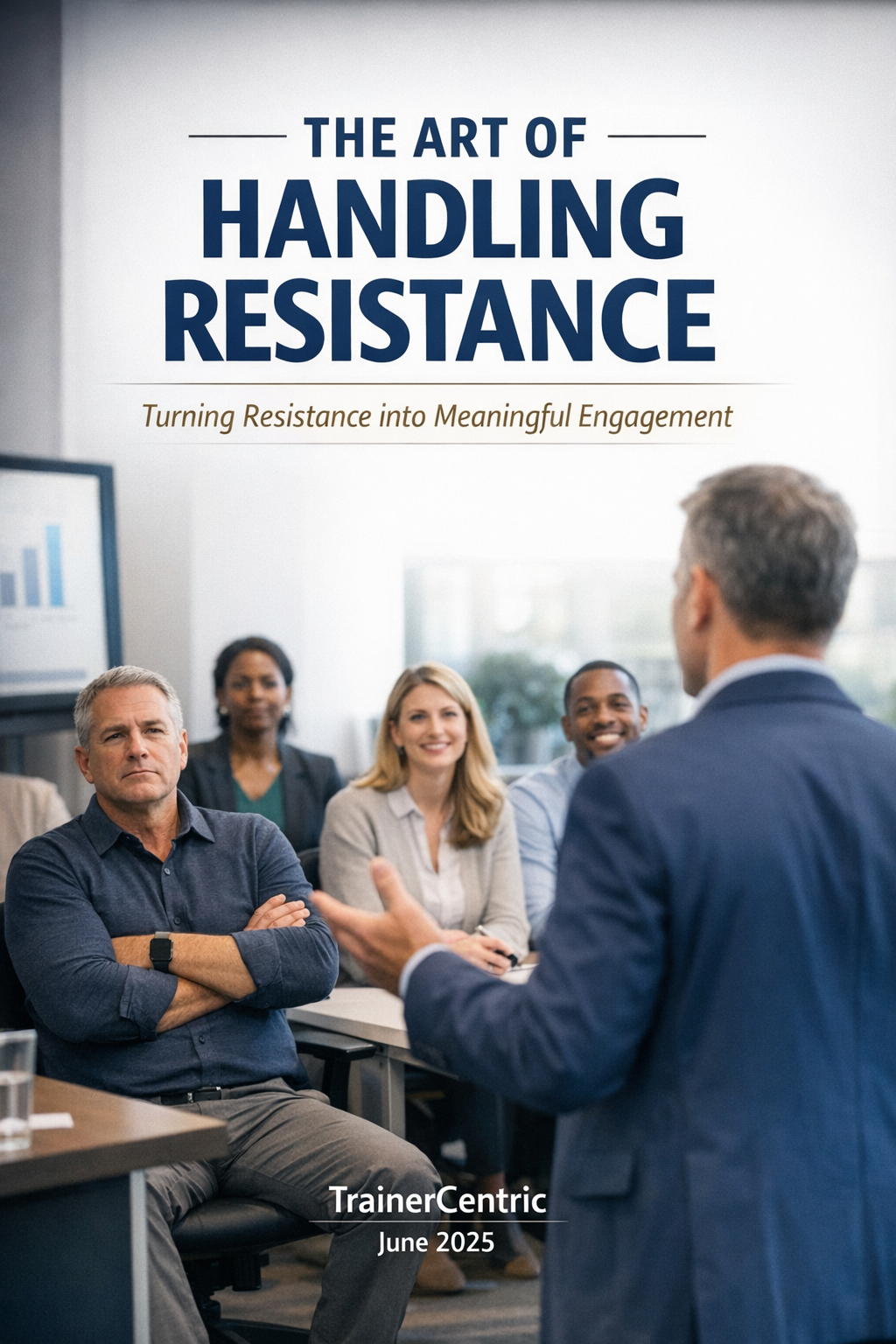
THE ART OF HANDLING RESISTANCE
Author: Arindam Mondal Category: Training Publisher: Trainercentric Published: June 19, 2025 ISBN: 9798288693779 More DetailsWhat if resistance isn’t the problem… but the pathway to deeper learning?
In today’s fast-paced corporate world, trainers and leaders often encounter disengaged participants, skepticism, silence, and pushback. Traditional approaches try to eliminate resistance—but what if the real opportunity lies in understanding it?
The Art of Handling Resistance reframes resistance as a powerful signal—not a barrier.
This book is your practical, real-world guide to navigating the most challenging moments in training rooms—both physical and virtual.
🔍 Inside This Book, You’ll Discover:
✔ Why learners resist—and what it truly means
✔ The 8 different types of resistance (verbal, emotional, cultural, and more)
✔ Real-life scenarios from corporate training environments
✔ Proven strategies to turn pushback into participation
✔ Mindset shifts that transform you from “trainer” to “engagement architect”
💡 What Makes This Book Different?
This isn’t theory-heavy or academic.
It’s built from real rooms, real learners, and real resistance—giving you tools you can apply immediately.
Each section breaks down:
- Why resistance happens
- What it signals
- How to respond effectively
- How to shift your mindset
🎯 Who This Book Is For:
- Corporate trainers & L&D professionals
- Facilitators & coaches
- Team leaders & managers
- Anyone who leads learning, change, or conversations
🔄 The Core Idea
Resistance isn’t rejection. It’s:
- A signal of unmet needs
- A reflection of past experiences
- An opportunity to build trust
When you learn to listen to resistance—not fight it—you unlock real engagement.
🚀 The Outcome
By the end of this book, you won’t just manage difficult participants…
You’ll:
- Read the room with confidence
- Respond with clarity and empathy
- Design sessions that reduce resistance before it appears
- Turn silence, skepticism, and pushback into powerful learning moments
✨ Final Thought
You don’t need to control the room to create impact.
You need to understand it.
And when you do—
resistance stops being a wall…
and becomes your greatest teaching tool.