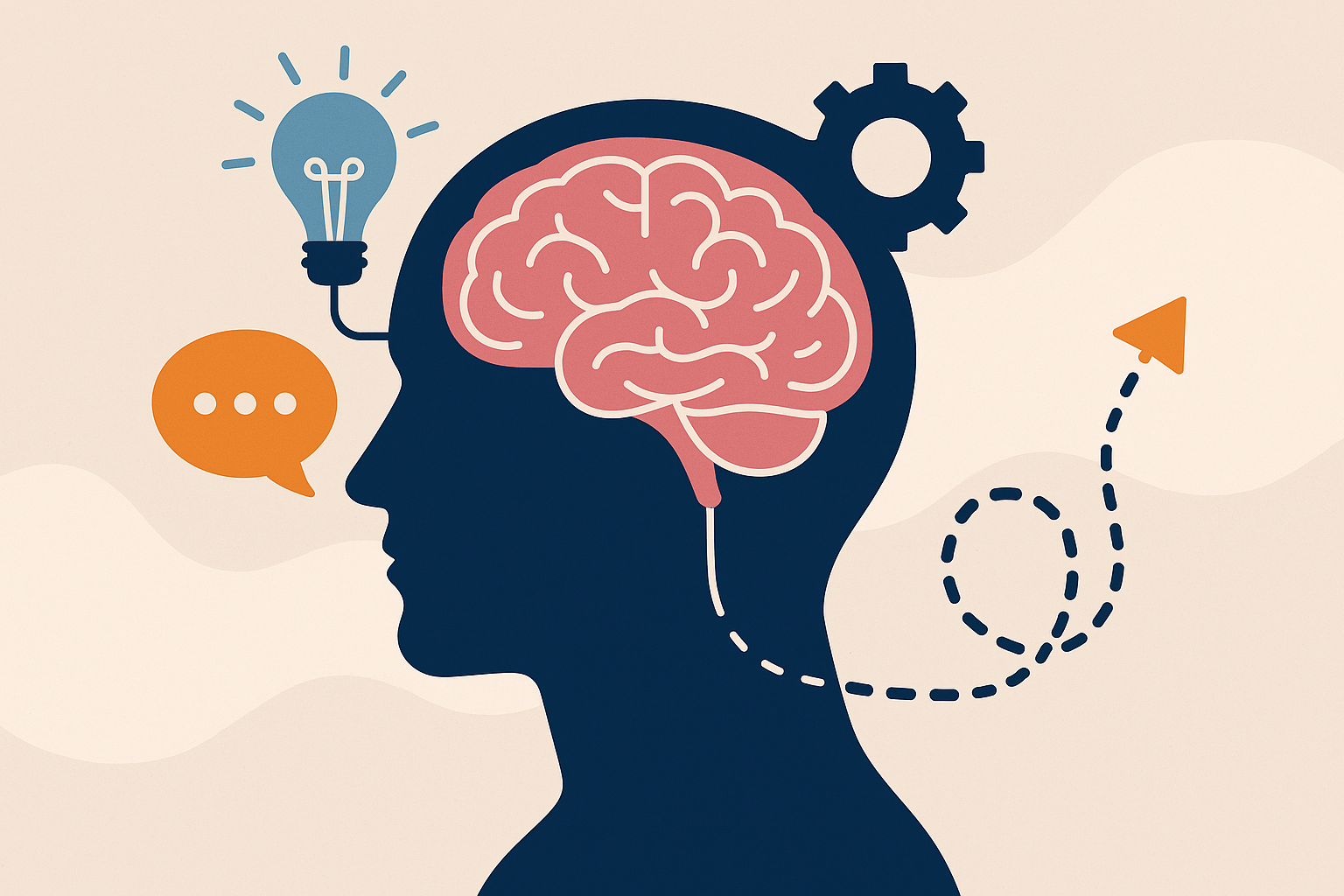
Introduction: Why “How to Engage Learners” Is the Most Important Skill in Training Today
If there is one question every trainer, facilitator, and L&D professional is asking, it is this:
How to engage learners in a world full of distractions, shrinking attention spans, and constant digital overload?
Training environments have changed dramatically. Learners today are busier, more stressed, and have more information competing for their attention. It’s no surprise that engagement—the very thing that transforms a training session into a learning experience—has become the critical differentiator.
Yet, for many trainers, engagement still feels like a mystery. Why do some trainers hold the room with ease while others struggle to get even basic participation? Why do certain sessions spark discussion, curiosity, and application… and others fade into the background?
This comprehensive guide is designed to give you the ultimate answer to how to engage learners—not through gimmicks, but through psychology, design, facilitation, and practical tools you can use right away.
This is The Engagement Code—a system you can apply to any training topic, any audience, and any environment.

Section 1: Understanding Learners — The Starting Point of How to Engage Learners
Before diving into strategies, techniques, and tools, we must understand one foundational truth:
You can’t figure out how to engage learners until you understand what actually drives engagement. Learners engage fastest when they feel the session is speaking directly to their lived experience. Opening with a problem they’ve faced—missed deadlines, difficult customers, team conflicts, or unclear expectations—immediately signals relevance. This works because the human brain is wired to pay attention to situations that resemble real emotional pain points.
Start with a statement like, “Have you ever walked into a meeting confident, only to walk out even more confused?” A relatable opener triggers recognition, lowers resistance, and gets learners curious about solutions. When learners see themselves in the scenario, they commit early and mentally invest in the session.
Modern learners are shaped by the following realities:
1. Share an Impactful Statistic
Strong numbers stick because they trigger both logic and emotion. A surprising statistic—like “70% of workplace communication breakdowns happen because people assume they’ve already been understood”—can instantly shake learners out of autopilot. When you share data that contradicts common beliefs, it forces learners to re-evaluate their assumptions. This creates a mental gap they want to close, making them more attentive. Use statistics that are credible, specific, and relevant to the topic you are about to explore. It also positions you as a well-prepared trainer who brings fresh insights rather than generic advice.
2. Use a Thought-Provoking Question
Questions activate the brain’s “search mode.” This means learners can’t help but try to answer—even silently. Opening the session with a compelling question such as, “Why do we remember some sessions for years and forget others in minutes?” creates cognitive tension that learners want to resolve. This natural curiosity fuels early engagement and encourages learners to lean in. A good opening question is simple, emotionally relevant, and directly tied to the session’s theme. It helps you position your training as something worth paying attention to, rather than just another information dump.
3. Tell a Short Powerful Story
Storytelling is one of the most effective ways to engage learners because stories activate multiple brain regions—including emotional processing, sensory imagery, and memory. A well-crafted 30–60 second story at the beginning of a session can set the tone, build trust, and spark emotional curiosity. For example:
“A new manager once told me he felt proud during his first team meeting—until he realised no one remembered a word he said.”
Stories humanize the content, making it easier for learners to connect with the material. When your story reflects their challenges, frustrations, or aspirations, engagement rises instantly.
4. Create a Pattern Break
Human attention drops when the brain predicts what will happen next. A pattern break interrupts this expectation and forces the mind to focus. This could be done through an unexpected prop, a surprising statement, a sudden change in voice tone, or a fresh activity. For example, you might begin by holding an object like a tangled earphone and saying, “This is your team communication on a bad day.” Small surprises like this disrupt passive listening and spark curiosity. Pattern breaks are powerful because they reset the learner’s mental state, especially at the start of a session or after a long break.
Understanding these learner realities helps you recognize that engagement is not accidental. It is intentional. And that is exactly why knowing how to engage learners is a strategic skill every trainer must master.

Section 2: The Six Laws of Engagement—The Core of How to Engage Learners Effectively
Through research and years of training design, we can break engagement down into six fundamental principles. These laws form the backbone of knowing how to engage learners consistently.
Law 1: Relevance
Learners engage when they see value.
This means your first step in knowing how to engage learners is establishing relevance in the first 60 seconds.
- Connect the topic to their real work.
- Show consequences of not knowing the skill.
- Share a relatable story or situation.
- Use a question that exposes a gap.
Once learners believe the session matters, engagement becomes natural.
Law 2: Choice
Providing autonomy is one of the quickest ways to learn how to engage learners effectively.
Choice increases ownership.
Ownership increases participation.
You can offer simple choices:
- “Which example should we discuss first?”
- “Please choose between Task A or Task B.”
- “Would you prefer a discussion or a quick analysis?”
When learners feel in control, engagement rises dramatically.
Law 3: Cognitive Ease
If instructions are unclear, slides are heavy, or activities are confusing, engagement drops instantly.
A huge part of knowing how to engage learners is designing sessions that feel simple, smooth, and friction-free.
Create cognitive ease by:
- Using simple slides
- Breaking content into small chunks
- Giving short, crisp instructions
- Reducing information density
Ease increases comfort. Comfort increases engagement.
Law 4: Social Energy
Humans engage more in social environments.
This is why one of the strongest answers to how to engage learners is using interaction strategically.
Examples include:
- Pair discussions
- Group tasks
- Micro-debates
- Collective problem solving
- Peer feedback loops
When learners share, question, respond, and collaborate, engagement becomes automatic.
Law 5: Emotional Connection
Emotion triggers engagement.
Emotion is the hook; logic is the explanation.
To master how to engage learners, incorporate:
- Stories
- Humor
- Contrasts
- Real-life examples
- “What would you do?” moments
- Surprising facts
These emotional elements activate attention and curiosity—two pillars of engagement.
Law 6: Momentum
Long explanations drain attention. Slow pace kills engagement.
Knowing how to engage learners requires maintaining momentum:
- Short bursts
- Quick wins
- Frequent interaction
- Shift of activities
- Varied methods
Momentum keeps the learning flow energetic and dynamic.
These six laws form the foundation of The Engagement Code—and they are essential if you want to understand how to engage learners consistently across different audiences and contexts.
Section 3: High-Impact Techniques — Practical Ways to Implement How to Engage Learners

Engagement isn’t accidental—it’s engineered with intention.
Below are five powerful, field-tested techniques written in a creative, memorable way to help trainers immediately elevate learner involvement.
1. The “First 5 Minutes Formula”
Win them fast, and you win them for the whole session. The first five minutes set the emotional climate of your workshop.
If you want to master how to engage learners, your opening must feel like a spark—short, unexpected, and tuned to their world.
Try opening with:
- a surprising fact that flips their assumptions,
- a relatable frustration that makes them nod,
- or a short scenario that mirrors their daily struggles.
Think of this as “priming the brain for attention.” Once learners feel you understand their challenges, they choose to stay mentally present.
It’s not about dazzling them—it’s about showing them they’re in the right room.
2. Turn Information Into Interaction
From passive listening to active doing.
Learners don’t remember what they hear—they remember what they do.
This is why every piece of content should have an embedded interactive moment.
You can create interaction by using:
- micro-discussions (30–60 seconds),
- pair reflections,
- real-time chats,
- quick polls,
- or clickable choices in virtual environments.
These moments act like tiny wake-up calls. Each interaction asks learners to process, react, or contribute—pulling them deeper into the learning loop.
If you want to understand how to engage learners, this is the simplest formula: Teach less. Interact more.
3. Build a Real-World Bridge
Make the content walk from the slides into their lives. Engagement spikes when learners feel training is solving problems they faced this morning, not problems they might face someday.
Create constant bridges by saying:
- “Here’s how this shows up in your client meetings…”
- “Think about yesterday’s team conversation…”
- “Imagine applying this in your next performance review…”
This technique transforms theory into relevance.
Learners suddenly see the training as a toolkit—not a lecture.
And the moment the session becomes usable, engagement becomes effortless.
Understanding how to engage learners is largely about answering one quiet question inside every participant’s mind: “How will this help me today?”
4. Design Learning Like a Story
Because stories pull learners in even when attention slips. Facts inform. Stories transform.
To ensure high engagement, structure your content with story elements:
- A problem
- A struggle
- A turning point
- A solution
- A takeaway
Even if you’re not “telling” a story, this narrative arc can guide your examples, demos, or case studies.
For instance:
- “A frustrated team lead struggled with repeated mistakes…”
- “After one small shift in how he gave instructions…”
- “The turnaround was immediate.”
This simple arc keeps learners emotionally invested. If you want to master how to engage learners, remember this truth:
The brain is storytelling hardware. Use it.
5. Leverage Micro-Participation
Small actions = big engagement.
Not every engagement tactic needs to be dramatic. Sometimes the smallest requests produce the biggest psychological involvement. Try micro-engagements such as:
- “Type one word in the chat…”
- “Raise your hand if…”
- “Turn to your partner and spend 15 seconds discussing…”
- “Write down one concern you have…”
These tiny commitments create momentum. Once learners give a little, they’re more likely to give more. It’s the behavioral principle called micro-yeses—a secret weapon for trainers who truly understand how to engage learners.
Section 4: The Trainer’s Engagement Toolkit (2025 Edition)
To fully understand how to engage learners, trainers need the right tools. Here are the top tools categorized by purpose:
| Interactive Technique | What It Means | How It Engages Learners | When to Use It |
|---|---|---|---|
| Polls & Quick Surveys | Short, real-time questions where learners vote or select options. | Encourages participation, captures opinions, and keeps attention high. | At the start to activate prior knowledge, mid-session to check understanding, or end to evaluate learning. |
| Breakout Rooms | Small-group discussions or activities in virtual or hybrid setups. | Promotes peer learning, deeper conversations, and social engagement. | When covering complex topics, brainstorming, or any activity requiring collaboration. |
| Scenario-Based Activities | Realistic problem-solving situations learners must respond to. | Builds practical thinking, emotional involvement, and real-world application. | Ideal for leadership, customer service, sales, decision-making, and behavioral skills. |
| Role-Plays | Learners act out real or hypothetical situations. | Enhances empathy, communication, and hands-on practice. | Best for soft skills, conflict handling, negotiation, presentations, and manager development. |
| Gamified Challenges | Activities using points, badges, timers, levels, or friendly competition. | Boosts motivation, energy, and participation through playful learning. | Use for long sessions, skill practice, or energizing low-engagement moments. |
| Interactive Case Studies | Analysis of real-world examples followed by discussion or decision-making. | Develops critical thinking, connects theory to practice. | Ideal for strategy, operations, leadership, compliance, and analytical topics. |
| Live Demonstrations | Showing tools, techniques, or processes in real time. | Makes abstract concepts tangible and visually memorable. | Perfect for product training, technical skills, processes, and system walkthroughs. |
| Think–Pair–Share | Learners reflect individually, discuss in pairs, then share with the group. | Encourages quieter participants, builds confidence, and fosters peer learning. | Use when introducing a new idea, exploring perspectives, or reviewing content. |
| Whiteboard or Annotation Activities | Learners contribute ideas on a shared digital/physical whiteboard. | Creates visual engagement, co-creation, and real-time collaboration. | Great for brainstorming, mapping concepts, or summarizing learning. |
Section 5: The Engagement Audit — Your Checklist for How to Engage Learners in Every Session
Use this 6-question audit before any training to ensure engagement is built into your session:
- Have I created relevance in the first minute?
- Are learners given choice at any point?
- Are my instructions and slides simple and clear?
- Do I have at least one interaction every 10 minutes?
- Is there an emotional hook somewhere?
- Does the session maintain momentum throughout?
If you can answer “yes” to these questions, you already know how to engage learners effectively and consistently.
Section 6: How to Engage Learners in Virtual Training (Special Focus)
Engaging learners in virtual environments demands a different level of intentionality. Unlike physical classrooms, trainers must work against screen fatigue, distractions at home, and the absence of physical presence. Below is a fully expanded guide on how to engage learners more effectively during virtual training sessions.
1. Start with a Warm Connection
A strong opening sets the tone for the entire session. Virtual spaces often feel cold or transactional, and learners may join while mentally preoccupied. Your job is to create an instant emotional connection that invites attention.
How to do it:
- Begin with a light check-in question (“What’s one word that describes your day so far?”).
- Use a quick poll to gauge participant expectations.
- Encourage learners to share a thought in chat—simple and low-pressure.
This quick relational bridge signals that the session will be conversational and inclusive, which is a powerful strategy for how to engage learners from the very first minute.
2. Reduce Slide Time
Too many virtual sessions suffer from slide overload. When learners stare at static information too long, their attention drops, and their minds wander.
How to do it:
- Use slides primarily as visual anchors, not as reading material.
- Include more diagrams, photos, and frameworks instead of dense text.
- Shift between your camera view and slides to break visual monotony.
- Use annotation tools, pointers, or highlights to keep visuals dynamic.
Shorter, visually appealing slide segments keep learners mentally present—an essential part of mastering how to engage learners in online settings.
3. Increase Activity Frequency
In virtual training, engagement windows shrink faster. What could hold attention for 15 minutes in a classroom often lasts just 5–7 minutes online. Interactivity needs to be intentional and frequent.
How to do it:
- Aim for interaction every 5–6 minutes: polls, chats, questions, reactions, or micro-activities.
- Break lectures into smaller blocks and follow each block with an engagement moment.
- Use quick breakout rooms for pair discussions or reflection tasks.
Frequent micro-engagements reduce passivity and ensure learners remain alert, making this one of the most effective tactics for how to engage learners virtually.
4. Use Breakouts Strategically
Breakout rooms can instantly increase participation—but only when used correctly. Mismanaged breakouts lead to awkward silence, confusion, and learner frustration.
How to do it:
- Keep breakout groups small (2–4 participants).
- Give short, clear instructions before sending learners out.
- Set a specific purpose, such as analyzing a scenario or sharing best practices.
- Always include a time limit, ideally 2–7 minutes.
- Provide a simple output (one insight, question, or action point).
Strategic breakouts give learners a voice and a sense of ownership—key elements in answering how to engage learners meaningfully.
5. Keep Cameras Optional but Encouraged
Learners today value psychological safety and autonomy. For some, turning their camera on raises anxiety or discomfort. For others, it increases connection and accountability. The goal is to find a balance.
How to do it:
- Invite learners to turn cameras on only during activities, not throughout the entire session.
- Use language like: “If you’re comfortable, I’d love to see your reactions during this part.”
- Avoid pressuring or shaming anyone who keeps their camera off.
- Use features like reactions, emojis, and chat to maintain engagement even with cameras off.
Respecting comfort while gently encouraging presence is a modern, human-centered approach to how to engage learners in digital environments.
When trainers ask how to engage learners online, the answer lies in simplicity, interactivity, and pacing.
Section 7: How to Engage Learners with Different Learning Styles
| Learning Style | How to Identify Them | What Engages Them Most | How to Engage Learners in This Style |
|---|---|---|---|
| Visual Learners | Prefer diagrams, charts, or visual explanations | Visual clarity and structured layout | Use infographics, models, mind maps, illustrations, frameworks, and clean visual slides. |
| Auditory Learners | Respond strongly to discussion, explanations, and stories | Sound, rhythm, verbal communication | Incorporate storytelling, podcasts, verbal walkthroughs, group dialogues, and reflective verbal sharing. |
| Kinesthetic Learners | Learn best through action, movement, and hands-on activities | Active participation and physical interaction | Use role-plays, real-life simulations, practice tasks, movement-based activities, and scenario challenges. |
| Reflective Learners | Prefer thinking time, writing, and internal processing | Space to pause, process, and reflect | Add journaling moments, pause points, note-taking time, private reflection prompts, and solo analysis questions. |
Section 8: Overcoming Resistance — A Key Part of How to Engage Learners
Engaging learners is not a one-time activity—it’s an ongoing cycle of testing, observing, measuring, and refining. The most effective trainers treat engagement like a dynamic system: something that evolves as learners’ needs, expectations, and working environments change. Measuring engagement helps you understand what is working, what needs adjustment, and where you can introduce new strategies to create a more impactful learning experience.
One of the simplest ways to start is by monitoring learners’ visible and invisible signals during a session. Are they asking questions? Are they using chat, participating in polls, or sharing opinions during discussions? Do their energy levels drop during certain sections of your training? These behavioral markers give you immediate insight into which parts of your session resonate—and which parts need fine-tuning. In virtual environments, this may include watch time, participation in collaborative tools, or engagement with breakout rooms. In physical environments, eye contact, note-taking, and body language are equally telling indicators.
Once you’ve gathered these insights, the next step is to introduce structured feedback mechanisms. Post-session surveys, quick pulse checks, reflection prompts, and digital feedback tools allow learners to voice what they loved, what confused them, and what they’d like improved. The key here is to keep feedback simple and specific—questions that are too generic often yield vague responses. Ask targeted questions such as: “Which activity helped you learn the most?”, “Where did you feel disengaged?”, or “What additional support would help you apply this skill on the job?” When feedback is focused, improvement becomes much more intentional.

Performance data adds another dimension to the engagement story. Measuring pre- and post-training assessments, on-the-job behavior changes, and progress in applied skills can reveal whether engagement activities are translating into actual learning. Even the most exciting training session is incomplete if learners cannot transfer what they’ve learned. By pairing engagement data with measurable performance outcomes, you can see not just who was active—but who truly learned.
Improvement is an iterative process. Use the data you collect to test new engagement strategies, experiment with delivery techniques, and refine your content flow. Maybe your session needs more interactive checkpoints. Perhaps the introductory section is too long, or your breakout activities need simpler instructions. Small tweaks often lead to big improvements in learner attention, confidence, and retention.
Ultimately, the goal is to build a continuous improvement loop where engagement insights shape your future training design. A trainer who consistently evaluates their own methods does more than deliver information—they create learning experiences that evolve, inspire, and make a meaningful difference every time.
Conclusion: Engagement Is Not an Art — It’s a System
By now you’ve seen that mastering how to engage learners is not about charisma, personality, or flashy activities. It is about understanding human behavior, designing better learning experiences, and facilitating with intention.
The Engagement Code—built on relevance, choice, ease, social energy, emotion, and momentum—gives trainers a complete roadmap for ensuring learners stay connected, curious, and committed.
When you apply these principles consistently, you won’t have to ask how to engage learners ever again.
Your sessions will speak for themselves.
![The Power of Storytelling in Corporate Training: Igniting Success and Inspiring Growth [2023]](https://trainercentric.com/wp-content/uploads/2023/06/storytelling-1024x576.jpg)