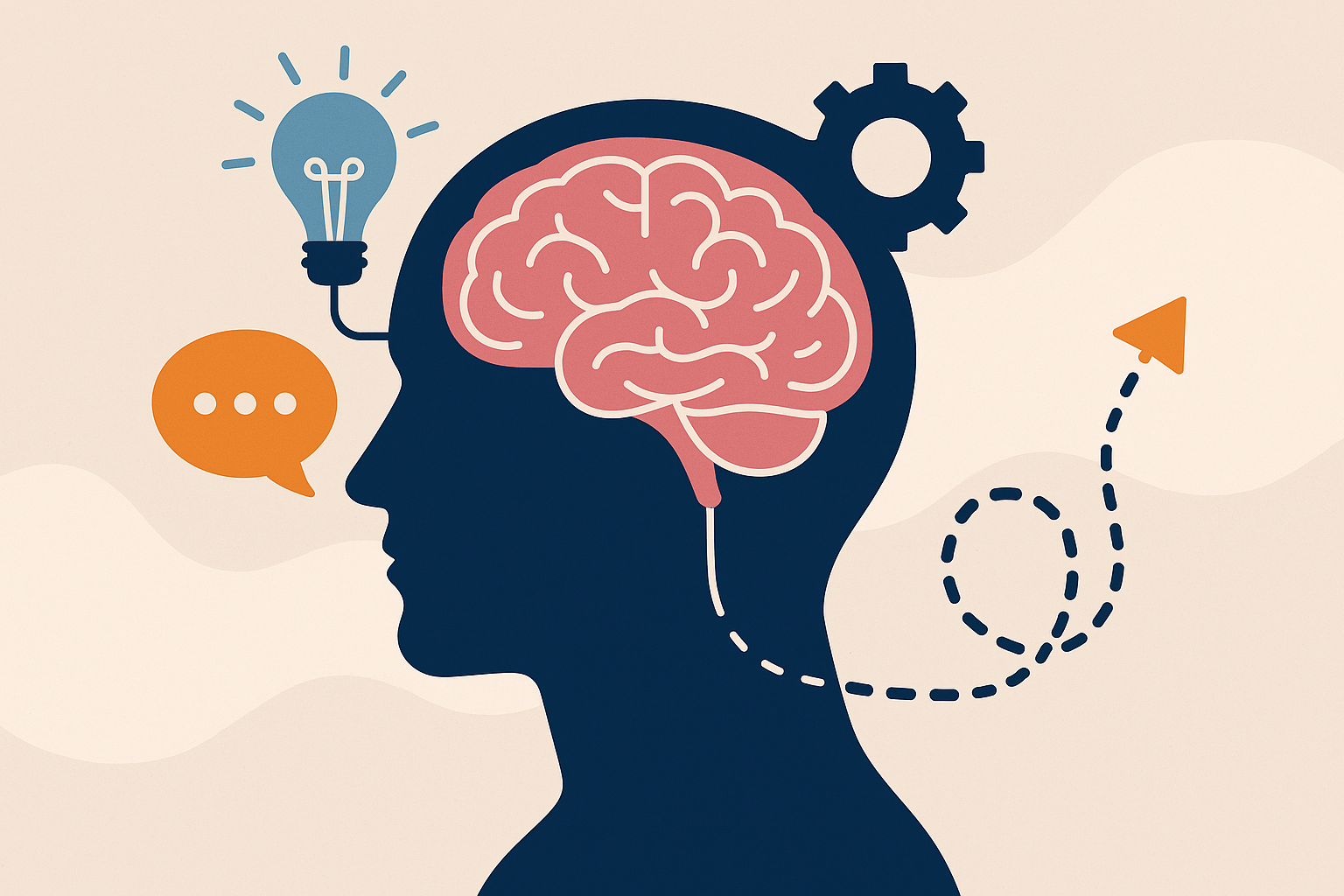
How Adult Learners Build Trust is one of the most misunderstood aspects of corporate training today. Many trainers believe trust is created through warmth, energy, icebreakers, and early participation. While these techniques may work with younger learners or social groups, adult learners operate under a very different psychological framework.
Adult learning theory, often referred to as andragogy, emphasizes that adults are self-directed, experience-rich, and motivated by relevance rather than compliance—a principle that fundamentally reshapes how trust is formed in learning environments. Adults do not bond first and then decide to learn. They decide whether learning is worth their time, effort, and dignity—and only then allow trust to develop. This distinction is critical in 2026, where corporate learners are experienced, time-poor, and highly selective about where they invest attention.
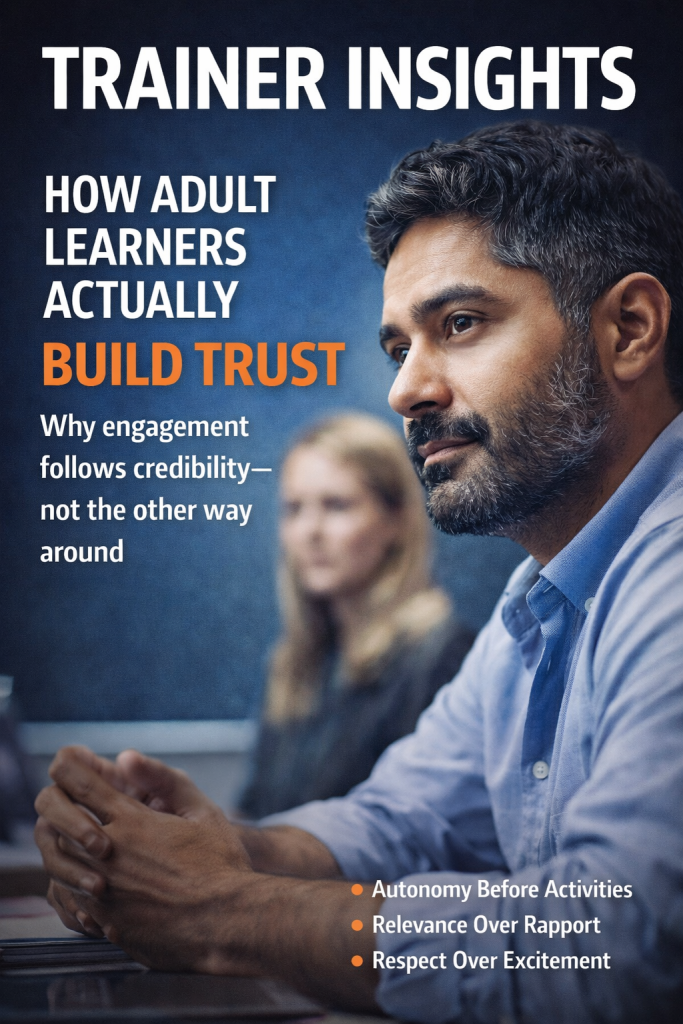
Why Trust Is the Real Starting Point of Adult Learning
Adult learners never arrive neutral. They enter training rooms carrying years of exposure to:
- Ineffective workshops
- Recycled content
- Forced participation
- Performative facilitation
This history shapes how trust is granted. Unlike students, adults do not suspend judgment during introductions. They assess immediately. How Adult Learners Build Trust begins with one silent question: “Is this worth my time and dignity?”
If this question is not answered early and convincingly, trust stalls—no matter how engaging the activities appear.
The Biggest Myth About Trust in Training Rooms
One of the most persistent myths in corporate training is that trust is built by making people comfortable quickly. Comfort and trust are not the same. Comfort is emotional ease. Trust is confidence in intent and competence. Adult learners can feel comfortable with a trainer and still not trust them. They may laugh, participate, and comply while remaining deeply skeptical. This is why surface engagement often coexists with zero behavior change. Understanding How Adult Learners Build Trust requires abandoning the comfort-first mindset.
Comfort and trust are not the same.
- Comfort = emotional ease
- Trust = confidence in intent and competence
Understanding How Adult Learners Build Trust requires abandoning the comfort-first mindset.
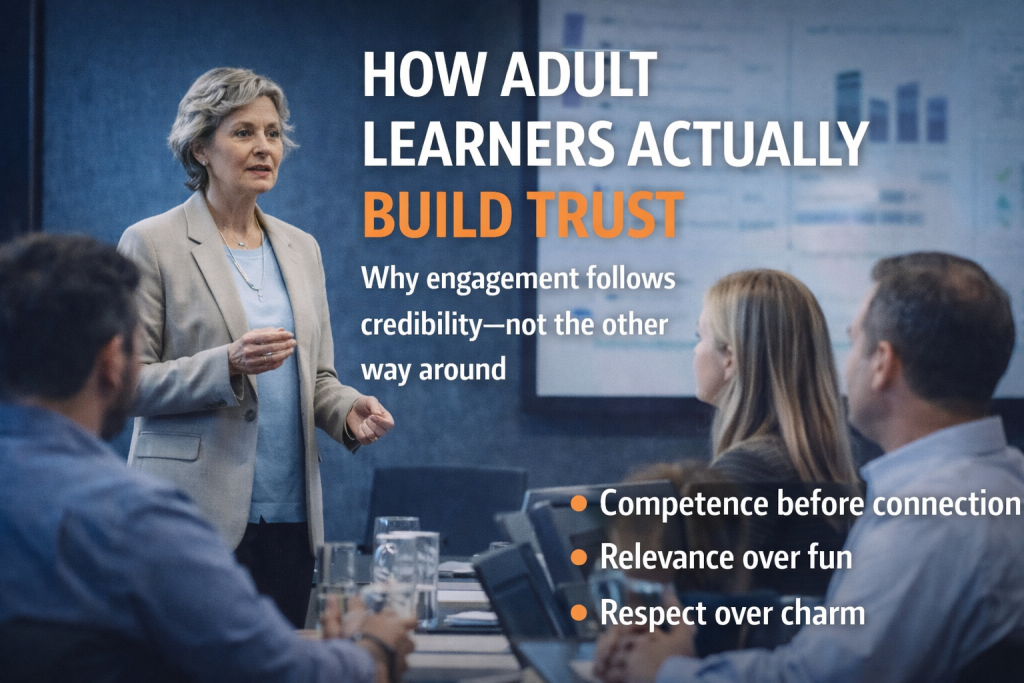
Adults Trust Competence Before Warmth
In adult learning environments, competence precedes connection. Adult learners are not impressed by energy alone. They look for evidence that the trainer understands:
- Their constraints
- Their trade-offs
- Their real workplace pressures
Trust accelerates when a trainer names a problem participants recognize but have never articulated. This is not charisma—it is resonance. Adults trust trainers who demonstrate insight, accuracy, and respect for reality.
Relevance Is the Fastest Trust Builder for Adult Learners
Relevance is not something trainers announce. It is something adult learners conclude. Trust grows rapidly when participants can clearly see how the session connects to their:
- Daily work
- Decision-making
- Performance outcomes
Adult learners build trust when trainers consistently:
- Link concepts to real workplace situations
- Use language participants already use
- Avoid abstract or generic examples
How Adult Learners Build Trust is inseparable from how well relevance is established and reinforced.
Psychological Safety Without Forced Participation
Psychological safety in adult learning is often misunderstood. For adults, safety is not created by speaking early—it is created by knowing they are not required to perform. Adult learners observe closely:
- How questions are handled
- How mistakes are treated
- How disagreement is received
Trust grows when participation feels genuinely optional and silence is treated as thinking, not resistance. Trainers who respect silence signal confidence and maturity.
Why Forced Participation Breaks Trust in Corporate Training
Forced participation is one of the fastest ways to erode trust with adult learners, even when it is framed as fun, engaging, or inclusive. Activities that require everyone to speak, share, role-play, or perform send a clear signal that the trainer’s agenda takes precedence over learner autonomy. For adults, autonomy is not a preference. It is a core psychological need tied directly to dignity and self-respect.
Adult learners are highly sensitive to coercion, particularly in professional settings where power dynamics already exist. When participation is mandatory, learners begin evaluating the personal and professional risks of compliance. They consider how their responses might be judged, remembered, or interpreted by peers, managers, or facilitators. This internal risk calculation shifts attention away from learning and toward self-protection.
Even light pressure, such as “let’s hear from everyone” or “just give it a try,” can trigger resistance when learners feel they have no real choice. Adults often comply outwardly while disengaging inwardly. This creates performative participation, where activity levels appear high but trust and learning depth remain low.
Trust grows when choice is genuine. When learners see that silence is accepted, opting out carries no penalty, and participation is invited rather than required, psychological safety increases. Adults engage more willingly when they feel respected as autonomous decision-makers.
In corporate training, trust and coercion cannot coexist. Trainers who remove forced participation and replace it with clear purpose, voluntary engagement, and respect for learner agency create environments where trust develops naturally. When adults feel in control of how they participate, engagement becomes authentic rather than enforced.
Adult Learners Trust Intent, Not Just Skill
Skill alone does not build trust. Adult learners continuously evaluate a trainer’s intent:
- Is this about learner outcomes?
- Or about delivering a polished performance?
Trust increases when trainers explain why an activity exists. Transparency reduces suspicion. Hidden agendas—even small ones—create distance. How Adult Learners Build Trust depends heavily on perceived honesty.
Why Consistency Matters More Than Energy
High energy may capture attention, but consistency builds trust. Adult learners relax when facilitation behavior is predictable:
- Questions are handled fairly
- Discussions are guided consistently
- Time and attention are respected
Consistency signals safety. Safety enables deeper engagement.
Respect Is a Core Trust Signal in Adult Learning
Respect in adult learning is not communicated through friendliness or enthusiasm. It is communicated through how seriously learners are treated as thinking professionals. Adult learners assess respect by observing whether the trainer acknowledges complexity, allows ideas to unfold fully, and resists the urge to simplify concepts for the sake of speed or entertainment.
Many trust breakdowns occur not because trainers are unkind, but because they unintentionally signal low expectations. Talking down, over-explaining obvious concepts, or rushing through nuanced discussions sends a subtle message that learner intelligence or experience is being discounted. Adults notice this immediately. When they feel underestimated, trust erodes quietly and quickly.
Respect is also demonstrated through pacing. Adult learners value time as a professional resource. Trainers who allow sufficient space for reflection, questioning, and sense-making communicate that learning matters more than “getting through the deck.” This reinforces trust by signaling that learner understanding is prioritized over content coverage.
Challenging adult learners respectfully is another powerful trust signal. Adults do not expect agreement; they expect to be taken seriously. When trainers probe assumptions, invite counterarguments, and engage with disagreement thoughtfully, learners feel recognized as capable contributors. This form of intellectual respect builds more trust than constant validation.
Why Vulnerability Comes After Trust (Not Before)
In adult learning environments, vulnerability is not a starting point. It is a consequence. Many corporate trainers are encouraged to invite personal sharing, emotional disclosure, or “open up the room” early in the session. While well-intentioned, this approach often misunderstands how adult learners experience risk. Adults do not equate vulnerability with safety. They equate it with exposure. Before trust exists, exposure feels dangerous rather than developmental.
Adult learners are constantly scanning the environment for signals of judgment, misuse of information, or unintended consequences. They ask themselves whether what they share could be remembered later, misinterpreted by peers, or used against them professionally. When vulnerability is requested before these concerns are resolved, learners protect themselves by offering surface-level responses or by withdrawing internally. This creates the illusion of openness without genuine depth.
Trust must first be established through consistency, fairness, and respect. Adult learners need to see how disagreement is handled, how mistakes are treated, and whether confidentiality is implicitly honored. They need to experience psychological safety through observation before they risk self-disclosure. Only after learners believe the environment is predictable and non-punitive does vulnerability begin to feel optional rather than demanded.
Experienced trainers understand that modeling thoughtful reflection is more effective than inviting emotional exposure. When trainers share structured insights, measured uncertainty, or learning-in-progress without oversharing, they demonstrate that reflection is valued more than confession. This lowers the perceived risk while maintaining intellectual seriousness.
Trainer Behaviors That Quietly Undermine Trust
Even seasoned trainers can weaken trust unintentionally by:
- Over-controlling discussions
- Avoiding difficult questions
- Prioritizing activities over real dialogue
Adults notice avoidance quickly. Trust erodes not through mistakes, but through a lack of honesty. Even seasoned trainers can weaken trust unintentionally by over-controlling discussions, avoiding difficult questions, or prioritizing activities over real dialogue.
Adults notice avoidance quickly. When trainers deflect challenging moments or rush past meaningful questions, learners interpret it as a lack of confidence or clarity. This directly affects How Adult Learners Build Trust, because adults are far more tolerant of uncertainty than they are of evasion.
More subtly, these behaviors signal that the session is being managed rather than facilitated. Over time, this creates emotional distance, reduces cognitive engagement, and undermines How Adult Learners Build Trust at a structural level—long before participation visibly drops.
How Experienced Trainers Build Trust Differently
Experienced trainers focus less on impressing and more on alignment. They:
- Listen more at the beginning
- Allow mental orientation before participation
- Create conditions rather than control behavior
They understand that How Adult Learners Build Trust has very little to do with energy, activities, or personality, and far more to do with clarity, relevance, and respect.
More importantly, experienced trainers recognize that How Adult Learners Build Trust is revealed in the structure of the session itself—how purpose is framed, how choice is preserved, and how thinking is valued before speaking. When these elements are in place, trust forms quietly and consistently, without being forced.
When Trust Becomes Visible in Adult Learning
Trust does not announce itself loudly.
It appears through:
- Thoughtful questions
- Respectful disagreement
- Reflective pauses
These moments cannot be engineered. They must be earned. Trust does not announce itself loudly. It shows up in thoughtful questions, respectful disagreement, and reflective pauses that signal learners are thinking, not performing.
These moments cannot be engineered. They must be earned through consistency and restraint. This is where How Adult Learners Build Trust becomes observable—not in volume or activity, but in the quality of attention and exchange.
When learners feel safe enough to challenge ideas, sit with silence, or reconsider their assumptions, the learning environment shifts. That shift is the most reliable indicator of How Adult Learners Build Trust taking hold in a meaningful way.
Final Word for Corporate Trainers
If building trust with adult learners feels difficult, the issue is rarely resistance or disengagement. More often, it is a mismatch between how trust actually forms in adults and how it is commonly pursued in training rooms. Adult learners do not withhold trust out of defensiveness. They withhold it until credibility, relevance, and respect are demonstrated.
Trust in corporate training is built through professional behaviors, not personality. It grows when learners experience fairness, choice, intellectual honesty, and consistency. These signals communicate that the trainer understands adult learners as autonomous professionals, not as participants to be managed. The signals are:
- Relevance
- Competence
- Respect
- Fairness
- Choice
How Adult Learners Build Trust is not a soft skill or an interpersonal tactic. It is a facilitation discipline grounded in structure, intent, and respect. Trainers who master this discipline stop chasing engagement and stop relying on performance. Engagement emerges naturally when trust is established. When trust is present, learning sustains itself.
Trainers who master it stop chasing engagement. Engagement becomes a natural byproduct of trust.
![The Power of Storytelling in Corporate Training: Igniting Success and Inspiring Growth [2023]](https://trainercentric.com/wp-content/uploads/2023/06/storytelling-1024x576.jpg)